
Post
Dark Circles: Is It Just Pigment, or a Shadow? A Specialist's Perspective for 2026
Hello, I am Dr. Hyung-kwon Park, a dermatologist at LUNN in Cheongdam and Apgujeong-rodeo. People often come to me saying they look tired because of their dark circles. While many assume it is just a matter of skin color, the truth is often found in the structural details of the face. At LUNN, our philosophy is 'Refining the Details, Achieving Perfect Harmony,' and this is especially true when we address the delicate area under the eyes.
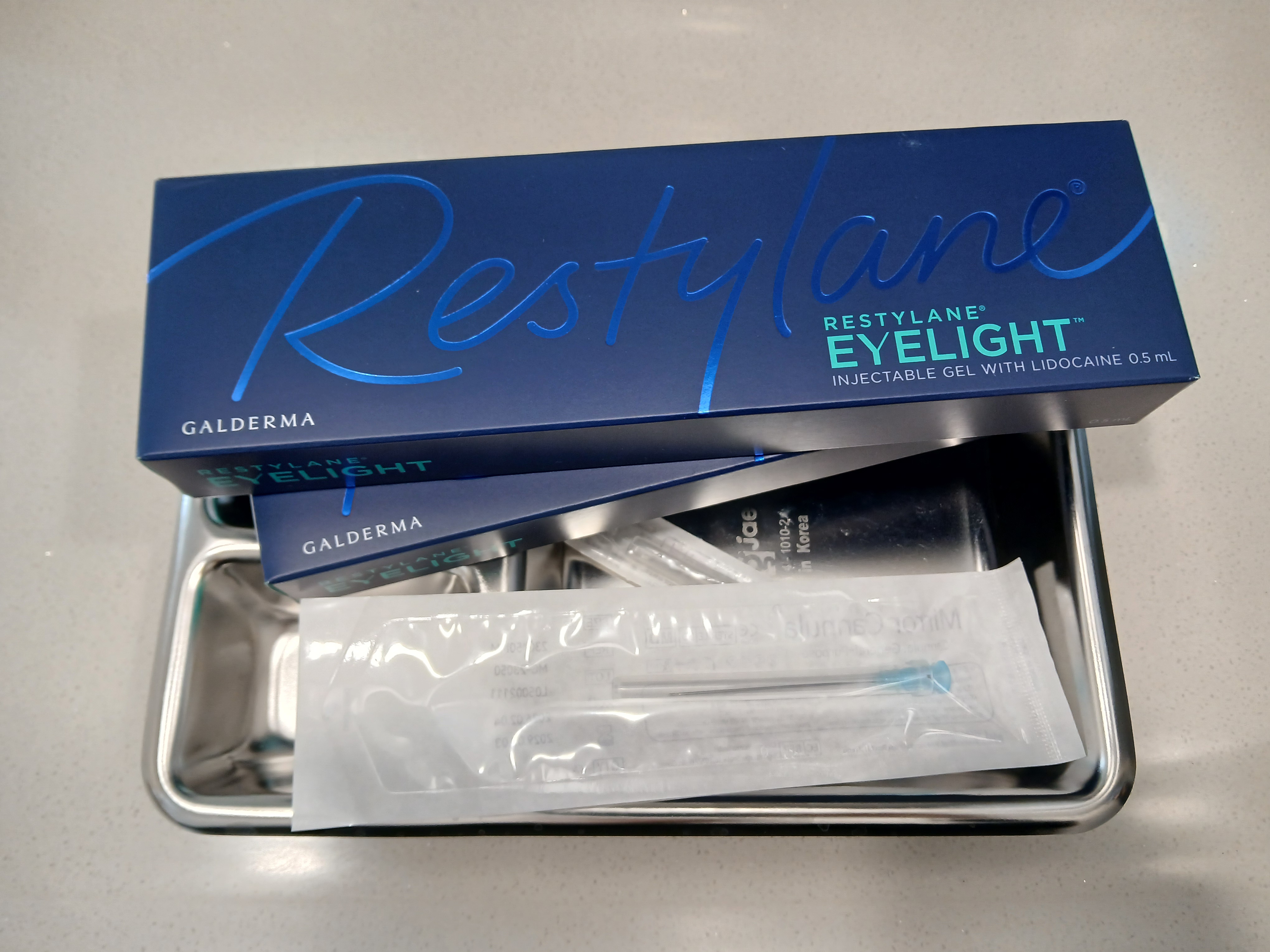
Understanding the root cause—whether it is a shadow, a vessel, or pigment—is the first step toward a natural, refreshed look.
In my clinical experience, treating dark circles is not just about choosing a laser or a filler; it is about analyzing the entire facial structure and the aging process. What you see in the mirror as a dark patch is often a complex interplay between skin thickness, ligament tension, and light. If you have been told that your dark circles are 'untreatable' or if previous treatments have failed, it may be because the underlying mechanism was not fully addressed.
What Are Vascular vs. Pigmented Dark Circles?
Dark circles are a descriptive term, but as a dermatologist, I look for what actually produces that color. While we classify them into vascular and pigmented types, I want to emphasize a third, crucial factor: the structural shadow. Many patients believe their skin is simply dark, but often, it is the 'tear trough ligament' pulling the skin inward that creates a valley. This structural gap creates a shadow that we perceive as a dark circle. Understanding this anatomical detail is what allows for a truly 'shining' result.
Defining Vascular Dark Circles: Beyond Just Vessels
Vascular dark circles occur when the exceptionally thin skin of the lower eyelid allows the underlying veins and capillaries to show through, often appearing as bluish or purplish tones. However, I often explain to my patients that this is rarely just a blood vessel issue. When there is a loss of volume, the resulting shadow amplifies the vascular tone. This is why you might look more tired in the morning or when you are fatigued—changes in circulation and slight swelling can make these vessels more prominent against the bone.
It is also worth noting that what looks like a vascular issue can sometimes be improved by addressing the skin quality itself. If the skin is too thin, no amount of circulation support will fully hide the vessels. We must think about the 'dermal environment.' By improving the health and thickness of the dermis, we can create a better 'curtain' to mask the vessels beneath. This is where my conservative, detail-oriented approach makes a significant difference.
Defining Pigmented Dark Circles: More Than Just Surface Melanin
Pigmented dark circles are characterized by a brown or tan hue, caused by an accumulation of melanin. While sun exposure and genetics are primary drivers, chronic irritation—like rubbing your eyes due to allergies—often triggers post-inflammatory hyperpigmentation. Unlike vascular shadows, this color remains relatively constant and does not shift when you press on the skin. It is a surface-level issue, but it often coexists with deeper structural changes.
Interestingly, many patients with pigment-type dark circles can still benefit from volume treatments. Through my clinical experience, I have found that even when the primary issue is melanin or visible vessels, improving the deep dermal environment with specific fillers can lead to noticeable improvement. This 'reverse logic' is part of my signature strategy; by enhancing the skin's internal condition, we can sometimes achieve better results than with pigment lasers alone. Of course, this requires a precise diagnosis to ensure we are not just adding volume where it isn't needed.
The 'Shadow Erasing' Strategy: Key Differences
To help my patients understand, I use a metaphor: think of a mountain and a valley. The 'shadow' is the valley created by the tear trough ligament. You can paint the valley (treat pigment) or try to clear the mist (treat vessels), but until you level the ground, the shadow remains. The table below outlines how we distinguish these types at LUNN.
| Feature | Vascular/Shadow Type | Pigmented Type |
|---|---|---|
| Primary Mechanism | Tear trough ligament pulling skin (Shadows) | Melanin accumulation in the skin |
| Typical Color | Blue, purple, reddish shadow | Brown, tan, grayish-brown |
| Dr. Park's View | "Structural gap creates the shadow" | "Sun, friction, and genetics trigger pigment" |
| Hidden Insight | Often improves by thickening the dermis | Can be improved by enhancing the dermal environment |
| Key Treatment | Dermal environment improvement + Fillers | Pigment lasers + Sun protection |
| Caution | Must avoid Tyndall effect (bluish swelling) | Must avoid post-inflammatory darkening |
Causes and Risk Factors: The Science of the 'Shadow'
Why do dark circles form? It is a combination of thinning skin, pigment, and contour shifts. However, the most overlooked factor is the 'tear trough ligament.' This ligament acts like a tether, pulling the skin toward the bone. As we age and lose fat, this tethering becomes more visible, creating a deep 'valley' that casts a shadow. If you feel like you look 'hollowed out,' this is likely the culprit.
Vascular and Structural Factors: The LUNN Perspective
Vascular congestion from lack of sleep or high salt intake can make vessels look darker, but the structural shadow is what gives dark circles their depth. I often tell my patients that the eyelid skin is like thin tissue paper. As we lose the collagen 'cushion' underneath, every vessel and ligament becomes more apparent. This is why I focus on 'Refining the Details'—we aren't just filling a hole; we are re-engineering the support structure of the eye.
Furthermore, for those who worry about swelling, I emphasize the use of 'low-hydrophilic' fillers. Traditional fillers can act like a sponge, pulling in water and causing that dreaded morning puffiness or a bluish 'Tyndall effect' under the eyes. By choosing products like Belotero that have low water affinity, we can address the vascular shadow while keeping the results natural and crisp. This attention to 'material science' is a cornerstone of my practice.
Pigmented and Environmental Factors
Melanin is stimulated by UV light, but also by friction. If you have chronic allergies and rub your eyes frequently, you are essentially 'tattooing' pigment into your skin through repeated micro-inflammation. While genetics play a role, I find that many patients can significantly improve their pigmented dark circles simply by changing their habits and using consistent sun protection. The skin around the eyes is the most delicate on your face; it requires a specialized, gentle approach.
Diagnosis: The Art of the Precision Analysis
Diagnosis at LUNN is not just a quick glance. I personally perform a 'state analysis' for every patient, touching the skin to feel the muscle thickness, the depth of the wrinkles, and the degree of ligament tethering. We don't rely on consultants to make treatment plans; as a dermatologist, I believe the physician's eye is the most important tool for a successful result.
The LUNN Diagnostic Process
We start with a visual exam under neutral light to see the true color and shadow distribution. I then use the 'stretch test' to see how the color behaves. If the color fades or shifts, it confirms a vascular or shadow component. I also look for the 'Tyndall effect' in patients who have had previous treatments elsewhere—this is a bluish hue caused by filler placed too superficially or a filler that attracts too much water. Identifying these nuances is what prevents 'lumpy' or 'unnatural' results.
Why a Specialist's Eye Matters
Many patients present with 'mixed' dark circles. Treating only the pigment when a deep shadow exists leads to frustration. I approach the face as a whole, looking for the 'Perfect Harmony.' For example, if we only treat the eyes but ignore the surrounding cheek volume, the result will look disconnected. My goal is to ensure that when you look in the mirror, you don't just see 'less dark circles,' but a more youthful, balanced version of yourself. This is the same logic I apply when analyzing skin layers for lifting treatments.
Treatment Options for the 'Shadow' and Vessels
When treating the vascular and structural shadow, we must be incredibly precise. The goal is to 'erase the shadow' without creating new problems like lumps or unnatural swelling. It is a game of millimeters.
The LUNN Filler Strategy: Belotero and Low Hydrophilicity
For most vascular and structural cases, I recommend a tailored filler approach. However, not all fillers are created equal for the under-eye area. I specifically use 'low-hydrophilic' fillers, such as Belotero. Unlike standard hyaluronic acid fillers that pull in significant amounts of water—leading to a puffy, 'sausage-like' appearance—low-hydrophilic fillers stay exactly where they are placed. This minimizes the risk of the Tyndall effect and ensures that you don't wake up with swollen eyes.
I also focus on 'dermal environment improvement.' By carefully injecting at the right depth, we can actually improve the skin's quality, making it less transparent. It is like adding a soft-focus filter to your skin from the inside out. For more on how we avoid complications, see my guide on minimizing swelling with tear trough fillers.
Lasers and Long-term Care
Vascular lasers can be effective for visible red or blue veins, but they are often a secondary step after we have addressed the structural shadow. I always tell my patients: 'filler starts the process, but skin health finishes it.' We must also manage underlying issues like allergies. If you are constantly congested, the vessels will continue to dilate, making any cosmetic treatment less effective.
Treatment Options for Pigmented Dark Circles
For true pigment, the focus shifts to melanin control. However, I still maintain my 'dermal environment' philosophy here. Even for pigmented cases, I have found that improving skin hydration and structure can make the pigment appear less intense.
Targeted Pigment Care
We use a combination of topical agents (like Vitamin C and Niacinamide) and specialized lasers (like Picosure or Q-switched lasers) to break down melanin. The key is to be conservative. The under-eye skin is thin, and being too aggressive with lasers can lead to more pigment, not less. We space treatments out to allow the skin to heal and the immune system to clear the pigment naturally.
The Importance of Aftercare
After any pigment treatment, sun protection is not optional—it is a requirement. I also suggest avoiding harsh scrubs or eye-rubbing. We want to keep the skin as calm as possible. I often tell my patients that 'patience is the best medicine' for pigment. It took years for the pigment to accumulate, so it will take several sessions to clear it safely. You might find my advice on post-laser dryness and recovery useful during this phase.
Key Takeaways
- Dark circles are often caused by the 'shadow' of the tear trough ligament, not just surface color.
- At LUNN, we use a 'shadow erasing' strategy that prioritizes structural harmony.
- Low-hydrophilic fillers (like Belotero) are essential to prevent the 'Tyndall effect' and morning swelling.
- Even vascular and pigmented types can benefit from improving the 'dermal environment' through precise injection.
- A specialist's 'state analysis' is required to distinguish between pigment, vessels, and shadows.
Frequently Asked Questions
Q. Why do my dark circles look like a shadow?
In many cases, the 'darkness' is actually a shadow caused by a structural gap. The tear trough ligament pulls the skin down, creating a valley. At LUNN, we focus on filling this 'valley' to erase the shadow and restore a smooth transition between the eye and the cheek.
Q. Can fillers really help with pigment or red vessels?
Yes, I have found that by improving the dermal environment with specific fillers, we can often mask vessels and make pigment look less severe. It's about thickening the 'curtain' of the skin. However, this must be done with low-hydrophilic products to avoid a bluish Tyndall effect.
Q. What is a 'low-hydrophilic' filler and why is it better for eyes?
'Low-hydrophilic' means the filler doesn't attract much water. Standard fillers can swell up, causing you to look puffy or making the area look blue (Tyndall effect). Using products like Belotero ensures the result stays natural and doesn't change when you are tired or hydrated.
Q. How many sessions are needed for dark circle treatment?
For structural shadows, the result is often visible immediately after filler, though a touch-up may be needed. For pigment or vascular issues, a series of 3 to 5 laser sessions is typical. I always prefer a conservative, staged approach to ensure the most natural result.
Q. Are there any side effects I should worry about?
Temporary redness or bruising is possible. The biggest risk with under-eye treatments is 'lumpiness' or the Tyndall effect, which is why I personally perform every procedure with a focus on 'Refining the Details' and using the correct material for this delicate area.
If you are tired of looking tired, I invite you to visit LUNN for a personal consultation. We will look beyond the surface to find the 'shining' version of you. For more updates, you can follow me on Threads @dr.lunn.
LUNN Dermatology Clinic / Dr. Hyung-kwon Park
FAQ
- What is the difference between vascular and pigmented dark circles?
- Vascular dark circles come from visible blood vessels, sluggish circulation, or a contour shadow beneath thin eyelid skin, and they usually appear bluish or purplish. Pigmented dark circles come from excess melanin and appear brown or tan. The distinction guides treatment, since vascular cases may respond to circulation support, vascular lasers, or volume correction, while pigmented cases typically need sun protection and pigment-targeting care.
- How can I tell if my dark circles are vascular or pigmented?
- A simple starting point is the stretch test: gently stretch the skin under the eye and observe whether the color fades or shifts (suggesting a vascular component) or persists and deepens (suggesting pigment). The test is helpful but not definitive, because many people have both components. A dermatologist can confirm the pattern with examination, history, and tools such as dermatoscopy.
- What are the treatment options for vascular dark circles?
- Treatment focuses on reducing vessel prominence, supporting circulation, and correcting contour where hollowing contributes to shadow. Options include sleep and hydration habits, allergy control, cold compresses, vascular lasers or IPL, and tear trough filler in selected cases. Results vary by individual, multiple sessions are often needed, and maintenance may be required as the underlying tendency persists.
- What are the treatment options for pigmented dark circles?
- Pigment-focused care combines daily broad-spectrum sunscreen with topical agents such as niacinamide, azelaic acid, vitamin C derivatives, or prescription hydroquinone under supervision. Procedures include chemical peels, Q-switched and picosecond lasers, and IPL. A dermatologist tailors the plan to skin type and pigment depth, and side effects such as temporary redness or post-inflammatory hyperpigmentation are possible.
- Are there home remedies that actually work for dark circles?
- Cold compresses, adequate sleep, and reducing salt intake can temporarily lessen puffiness and improve how the area looks, which helps mainly with the vascular component. Home remedies do not remove established pigment or resolve structural shadowing. For persistent or deepening dark circles, professional evaluation is the more reliable path.
- Can dark circles be a sign of a health problem?
- In some cases dark circles are associated with allergic rhinitis, anemia, thyroid conditions, dehydration, or chronic skin inflammation. Sudden onset, one-sided change, or accompanying symptoms such as itching, swelling, or vision changes warrant medical assessment. A clinician can help rule out underlying conditions before cosmetic treatment is considered.
- How much do treatments for dark circles cost?
- Costs vary with treatment type, the number of sessions required, and geographic location. Topical regimens generally cost less upfront but require ongoing use, while laser series and injectables involve higher per-session costs plus maintenance. A consultation provides a personalized estimate and clarifies what a typical plan includes.
- Are treatments for dark circles safe?
- When performed by a qualified dermatologist with appropriate settings and patient selection, treatments for dark circles are generally well tolerated. All procedures carry some risk, including redness, swelling, bruising, and pigment change, and filler carries specific risks in the tear trough area. Discussing risks and aftercare before treatment helps set realistic expectations.
- Can I prevent dark circles from getting worse?
- Daily sun protection, gentle skincare, adequate sleep, and avoiding habitual eye rubbing help limit progression, and managing allergies may reduce the vascular component. Avoiding smoking and maintaining hydration support skin health. Because genetic and anatomical factors cannot be changed, a dermatologist can advise on realistic prevention and maintenance for your specific pattern.