
Post
Why Does My Under-Eye Filler Look Lumpy, and How Can It Be Fixed? A 2026 Guide from LUNN
Hello, I am Dr. Hyung-kwon Park, a board-certified dermatologist at LUNN Dermatology Clinic in Cheongdam and Apgujeong Rodeo.
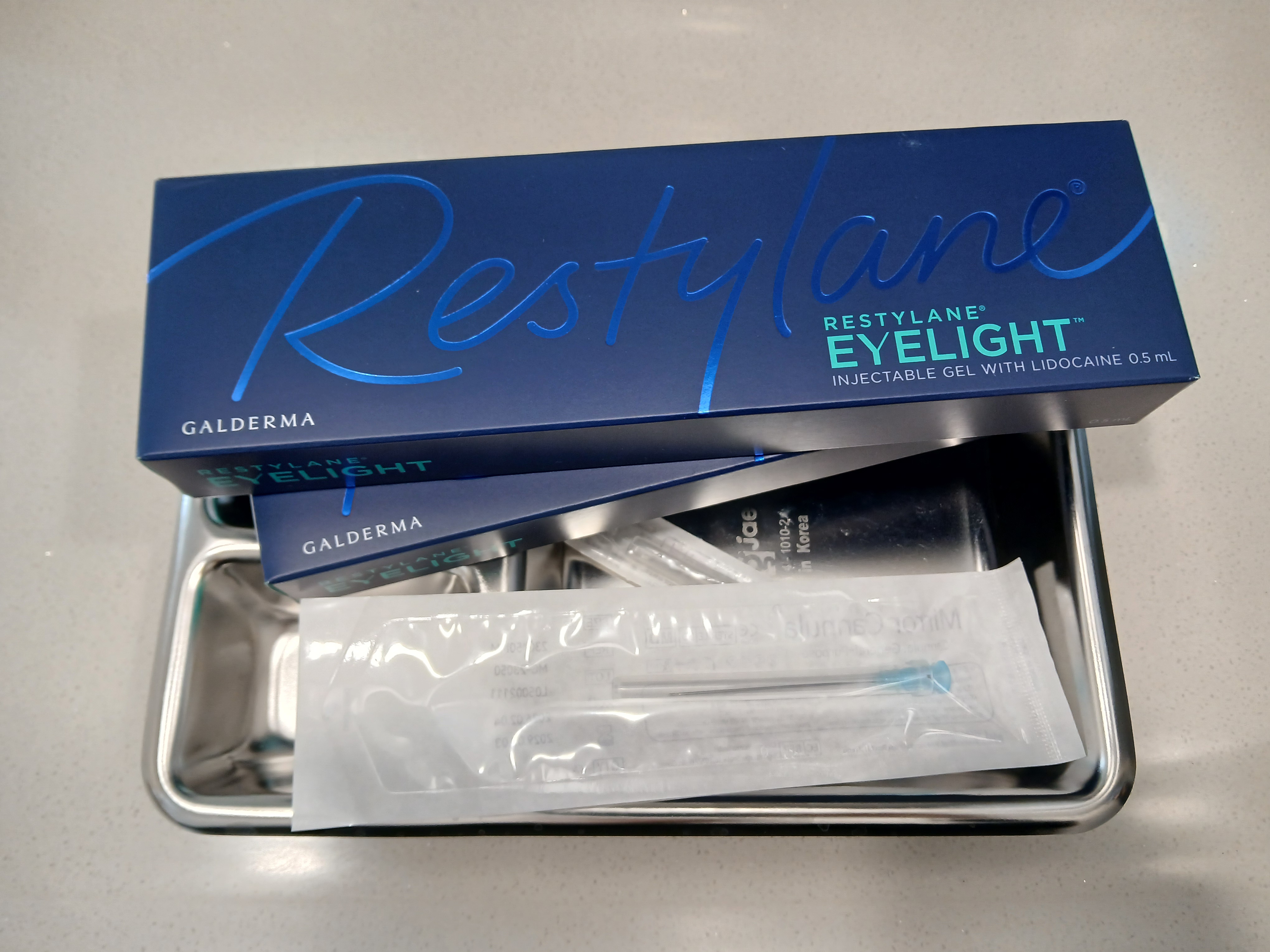
Why Does Under-Eye Filler Look Lumpy?
Under-eye filler is a hyaluronic acid gel placed in the thin, layered tissue beneath the lower eyelid to soften hollowing; lumps are discrete irregularities in that gel or the tissue response around it. This guide explains why they appear, how early and late lumps differ, and which correction options exist in 2026. At LUNN, I believe the approach must start with a precise clinical diagnosis, because the right fix depends on the cause. Please note that individual results may vary, and potential side effects like swelling or bruising can occur.
The skin under the eyes is among the thinnest on the face, so even a small volume of product or a slight shift can become visible. That is why technique and product choice matter so much in this area.
How Under-Eye Filler Works: Anatomy and Common Products
Under-eye filler restores volume in the tear trough, the groove between the lower eyelid and cheek. The region contains thin skin, the orbicularis oculi muscle, and several ligamentous attachments that hold tissue in place. Hyaluronic acid fillers are the most common choice here because they are soft, reversible with hyaluronidase, and predictable in experienced hands. Low-hydrophilicity HA products, such as Belotero, tend to attract less water, which can reduce puffiness (the Tyndall effect) in the first weeks.
Anatomy drives outcomes. The infraorbital artery and other vessels run nearby, so injectors often use a cannula and place product in small aliquots on bone or in the deep fat compartment. Superficial placement in this thin skin is a known contributor to visible bumps. At LUNN, my assessment begins with the skin's thickness, the depth of the hollow, and the position of the retaining ligaments before any product is chosen. Patients with very thin skin or prominent muscle activity may need a different plan entirely. As a dermatologist, I view the under-eye as a structural area—like a landscape of mountains and valleys—where structural differences create shadows.
Why Lumps Form: Common Causes and Risk Factors
Lumps form when filler sits unevenly, when fluid collects around the product, or when the tissue reacts to it. The most frequent contributors are superficial injection, too much volume for the space, poor product choice, and repeated treatments that leave residual gel. Swelling in the first days can exaggerate minor unevenness and make it look like a true lump.
Risk factors include thin skin, pre-existing fluid retention, a history of allergies, and previous under-eye procedures. The Tyndall effect, a bluish tint, occurs when clear HA is placed too superficially and light scatters through it. Granulomas are a delayed, immune-mediated response and are uncommon but possible with any filler.
Not every bump is filler. Eye bags from fat herniation and fluid retention can mimic lumps, which is why a hands-on examination matters. At LUNN, the first step I take is to distinguish product-related bumps from structural or fluid causes by manually feeling the tissue and analyzing the anatomical structure.
Is It Normal to Feel Lumps After Under-Eye Filler?
Small irregularities in the first one to two weeks are common and often settle as swelling resolves. The area may feel firm or slightly bumpy while the product integrates with tissue. Gentle, even texture is expected; distinct, palpable nodules that persist are not.
Normal post-treatment findings include mild swelling, tenderness, and occasional bruising. These usually improve within days. A lump that is painless, soft, and fading is generally part of healing. A lump that is hard, growing, painful, or associated with redness or warmth deserves prompt review.
As a dermatologist, I advise patients not to judge the result in the first week. Most early unevenness resolves, and early massage or pressure can sometimes do more harm than good. If a bump remains after two to three weeks, or if anything feels wrong, an assessment at LUNN can clarify the cause through direct physical examination.
Immediate vs. Delayed Lumps: Causes and Solutions
Lumps after under-eye filler fall into two broad groups: early lumps within days, and late lumps appearing weeks to months later. The timing is a strong clue to the cause, and it guides whether observation, massage, dissolution, or another approach is appropriate. Understanding this distinction prevents unnecessary treatment and helps set realistic expectations.
Early Lumps (Within Days): Swelling, Migration, and Technique
Early lumps usually reflect swelling, minor product unevenness, or placement that is too superficial. Swelling can pool asymmetrically and create a temporary ridge. Technique-related bumps appear when product is deposited in uneven amounts or too close to the skin surface. Migration is less common in the first days but can occur if large volumes are placed in a soft tissue plane.
In the early phase, most practitioners recommend observation, light cooling, and avoiding pressure on the area. Aggressive massage is not universally advised, because it can push product into unintended planes. If a lump is clearly due to superficial placement, a small-volume correction or careful massage may be considered by the treating provider. At LUNN, my early review focuses on distinguishing fluid from product. Most early lumps soften over one to two weeks, but persistent or firm nodules need reassessment. Patients should avoid rubbing, strenuous exercise, and facial massage in the first days.
Late Lumps (Weeks to Months): Granulomas, Product Buildup, and Tyndall Effect
Late lumps appear after the initial swelling has resolved. Common causes include product buildup from repeated treatments, granulomas, and the Tyndall effect. Product buildup creates a firm, persistent area where filler has accumulated. Granulomas are inflammatory nodules that can appear months later and may be tender. The Tyndall effect is a bluish discoloration from superficially placed HA, often visible in certain lighting.
Evaluation includes precise palpation, lighting assessment, and a thorough review of the patient's anatomical history to confirm product location. Hyaluronidase can dissolve HA-based filler, while granulomas may require steroid injection or, rarely, excision. The Tyndall effect often improves with dissolution or time. At LUNN, I assess late lumps with attention to product type and prior treatment history, since these determine the safest correction. Patients should not attempt to drain or manipulate late lumps at home. Persistent or growing nodules warrant prompt medical review to rule out infection or granuloma.
Comparison of Treatment Options for Early vs. Late Lumps
The table below summarizes general options by timing. It lists characteristics only; suitability is determined by a clinician after examination.
| Timing | Common cause | Typical options | Notes |
|---|---|---|---|
| Early (days) | Swelling, mild unevenness | Observation, cooling, light massage if advised | Often resolves in 1–2 weeks |
| Early (days) | Superficial placement | Small-volume correction, targeted massage | Provider-directed only |
| Late (weeks–months) | Product buildup | Hyaluronidase | Reversible for HA fillers |
| Late (weeks–months) | Granuloma | Steroid injection, observation, excision in rare cases | Requires medical assessment |
| Late (weeks–months) | Tyndall effect | Hyaluronidase or time | Bluish tint may fade |
No single option fits every case. A meticulous hands-on examination and structural analysis guide the choice. At LUNN, I tailor the plan to the cause, not just the appearance.
How to Fix Lumpy Under-Eye Filler: At-Home and In-Office Options
Correction ranges from watchful waiting to in-office dissolution, depending on the cause and timing. Home measures can support healing but cannot remove product or treat granulomas. In-office options are more definitive but carry their own considerations, and the choice should follow a proper assessment.
At-Home Management: Massage, Heat, and What to Avoid
Home care is supportive, not curative. Light cooling in the first 48 hours can reduce swelling. Gentle massage may help mild, early unevenness if the treating provider advises it, but technique matters: use a clean finger, minimal pressure, and move in one direction as instructed. Heat is generally not recommended early, because it can increase swelling.
Avoid aggressive rubbing, facial rollers, and pressure on the area. Do not attempt to drain or puncture a lump. Avoid strenuous exercise, alcohol, and blood-thinning medications in the first days unless your provider says otherwise. If a lump is painful, red, or warm, stop home measures and seek review.
At LUNN, patients receive written aftercare instructions tailored to the product used. Most early lumps improve with time and gentle care. Persistent lumps, or those appearing weeks later, are not solved at home and should be evaluated.
In-Office Treatments: Hyaluronidase, Steroids, and Surgical Excision
In-office options target the cause. Hyaluronidase dissolves hyaluronic acid filler and is the main correction for HA-related lumps, including the Tyndall effect. It is injected after a skin test when required, and the response varies by product and individual. Steroid injections may be used for granulomas or persistent inflammatory nodules. Surgical excision is reserved for rare, refractory cases and is performed by a specialist.
Each option has limits. Hyaluronidase can dissolve more than intended, so precise dosing matters. Steroids carry risks such as skin thinning or pigment change if overused. Excision is invasive and uncommon. At LUNN, my correction process begins with confirming the product and its location. In many cases, a small, targeted dose is enough. Patients should understand that correction may require more than one visit and that the final contour depends on the underlying anatomy.
Pros and Cons of Each Solution: A Comparison Table
The following table lists general characteristics. It does not rank options or predict individual results.
| Option | Potential benefit | Considerations |
|---|---|---|
| Observation | Non-invasive; allows natural settling | Does not remove product; time-limited |
| Massage (provider-directed) | May help mild early unevenness | Can worsen some lumps if done incorrectly |
| Hyaluronidase | Dissolves HA filler; reversible | Requires assessment; possible allergic reaction |
| Steroid injection | Can reduce granuloma-related inflammation | Risk of skin thinning or pigment change |
| Surgical excision | Removes refractory nodules | Invasive; reserved for rare cases |
Candidates for each option differ. A consultation at LUNN includes a review of prior treatments, product type, and goals. Correction is a clinical decision, not a menu choice.
Prevention and Choosing the Right Provider
Prevention centers on product choice, injection technique, and realistic volume. The under-eye area tolerates only small amounts of filler, and overfilling is a common cause of lumps. Choosing an experienced injector and following aftercare are the most reliable ways to reduce risk.
How to Minimize the Risk of Lumps: Product Selection and Injection Technique
Product selection matters in thin skin. Soft, low-hydrophilicity HA fillers are often preferred because they attract less water and feel smooth. Smaller volumes, placed deep or in small aliquots, reduce the chance of visible bumps. A cannula can lower the risk of vascular injury and allow more even placement. Avoiding repeated layering of product in the same plane helps prevent buildup.
Technique details include slow injection, aspiration when appropriate, and careful mapping of the tear trough. Overcorrection is avoided. Aftercare, such as avoiding pressure and strenuous exercise, supports even settling.
At LUNN, my plan begins with an assessment of skin thickness, hollow depth, and prior treatments. Patients with very thin skin or prominent fluid retention may be advised to stage treatment or consider alternatives. No technique eliminates all risk, and individual healing varies.
What to Look for in a Qualified Injector
A qualified injector has relevant training, experience with the under-eye area, and a practice built on assessment. Look for a clinician who examines the area, reviews prior treatments, and explains risks and alternatives. Ask about product choice, technique, and how complications are managed. A provider who treats the under-eye as a routine area without discussion warrants caution.
In the United States, licensure and board certification can be verified through state medical boards. In Korea, specialist certification can be confirmed through the relevant medical association. At LUNN, care is led by a dermatologist with a focus on the under-eye as a structural region. A consultation should include a clear discussion of limitations and the possibility of revision.
When to Seek Help and What to Expect During Consultation
Seek help if a lump is painful, red, warm, growing, or associated with vision changes. Persistent lumps beyond a few weeks also warrant review. These signs may indicate infection or granuloma and should not be managed at home.
A consultation includes a detailed history and a hands-on physical examination. During this time, I personally feel and observe the muscle thickness, fat volume, and bone structure to identify the cause of the lump. Expectations are set: correction may require more than one visit, and final contour depends on anatomy. At LUNN, I ensure the consultation is a diagnostic conversation focused on expert medical assessment.
Key Takeaways
- Under-eye lumps can be early (swelling, technique) or late (buildup, granuloma, Tyndall effect), and timing guides treatment.
- Small irregularities in the first two weeks often settle, but persistent or painful lumps need assessment.
- Hyaluronidase can dissolve HA filler, while granulomas may need steroid injection or, rarely, excision.
- Prevention relies on appropriate product choice, small volumes, careful technique, and realistic expectations.
- Choosing an experienced injector and following aftercare reduce, but do not eliminate, risk.
If you are concerned about lumps after under-eye filler, a personalized assessment at LUNN can clarify the cause and the appropriate next step. For more insights, you can follow my updates on Threads @dr.lunn.
LUNN Dermatology Clinic / Dr. Hyung-kwon Park
Frequently Asked Questions
Q. Why does my under-eye filler look lumpy?
Under-eye filler can look lumpy because of superficial placement, uneven product distribution, swelling, or delayed reactions such as granulomas. The skin under the eyes is thin, so even small irregularities become visible. A hands-on examination is needed to identify the cause and the right correction.
Q. How much does it cost to fix lumpy under-eye filler?
Costs vary by treatment and provider. Hyaluronidase injection is generally less involved than surgical excision, and consultation fees may apply. Because fees differ by clinic and region, the most reliable approach is to discuss costs during a consultation at LUNN.
Q. Can I massage my under-eye filler to smooth out lumps?
Massage may help mild, early unevenness if your injector advises it, but incorrect or aggressive massage can worsen some lumps. Avoid rubbing if the lump is firm, painful, or appeared weeks later. Always confirm with your treating provider before massaging.
Q. What are the risks of under-eye filler?
Risks include lumps, swelling, bruising, infection, granulomas, the Tyndall effect, and, rarely, vascular occlusion. The under-eye area is delicate, so choosing an experienced provider and following aftercare are important. Individual healing also affects outcomes.
Q. How long do lumps under the eyes last after filler?
Swelling-related lumps often improve within days to weeks. Lumps from product buildup or granulomas can persist for months and may require treatment. Hyaluronic acid filler can be dissolved with hyaluronidase when appropriate.
Q. Can lumpy under-eye filler be prevented?
Prevention involves choosing a skilled injector, using suitable products, and avoiding overfilling. Techniques such as cannula use and small aliquots can reduce risk. Aftercare and realistic expectations also support a smoother result.
Q. When should I see a doctor for lumpy under-eye filler?
See a doctor if a lump is painful, red, warm, growing, or associated with vision changes, or if it persists beyond a few weeks. Early review can improve outcomes and rule out infection or granuloma.
Q. What is the difference between under-eye filler lumps and eye bags?
Filler lumps are discrete bumps from the product or tissue reaction, while eye bags reflect fluid retention or fat herniation. Lumps may feel like small nodules, whereas bags appear as puffiness. A clinician can distinguish them and recommend appropriate care.
FAQ
- Why does my under-eye filler look lumpy?
- Under-eye filler can look lumpy because of superficial placement, uneven product distribution, swelling, or delayed reactions such as granulomas. The skin under the eyes is thin, so even small irregularities become visible. A hands-on examination is needed to identify the cause and the right correction.
- How much does it cost to fix lumpy under-eye filler?
- Costs vary by treatment and provider. Hyaluronidase injection is generally less involved than surgical excision, and consultation fees may apply. Because fees differ by clinic and region, the most reliable approach is to discuss costs during a consultation at lunnclinic.
- Can I massage my under-eye filler to smooth out lumps?
- Massage may help mild, early unevenness if your injector advises it, but incorrect or aggressive massage can worsen some lumps. Avoid rubbing if the lump is firm, painful, or appeared weeks later. Always confirm with your treating provider before massaging.
- What are the risks of under-eye filler?
- Risks include lumps, swelling, bruising, infection, granulomas, the Tyndall effect, and, rarely, vascular occlusion. The under-eye area is delicate, so choosing an experienced provider and following aftercare are important. Individual healing also affects outcomes.
- How long do lumps under the eyes last after filler?
- Swelling-related lumps often improve within days to weeks. Lumps from product buildup or granulomas can persist for months and may require treatment. Hyaluronic acid filler can be dissolved with hyaluronidase when appropriate.
- Can lumpy under-eye filler be prevented?
- Prevention involves choosing a skilled injector, using suitable products, and avoiding overfilling. Techniques such as cannula use and small aliquots can reduce risk. Aftercare and realistic expectations also support a smoother result.
- When should I see a doctor for lumpy under-eye filler?
- See a doctor if a lump is painful, red, warm, growing, or associated with vision changes, or if it persists beyond a few weeks. Early review can improve outcomes and rule out infection or granuloma.
- What is the difference between under-eye filler lumps and eye bags?
- Filler lumps are discrete bumps from the product or tissue reaction, while eye bags reflect fluid retention or fat herniation. Lumps may feel like small nodules, whereas bags appear as puffiness. A clinician can distinguish them and recommend appropriate care.