
Post
Why Botox Asymmetry Happens and How to Fix It: A 2026 Professional Guide
Hello, I am Dr. Hyung-kwon Park, a dermatologist in Cheongdam and Apgujeong Rodeo.
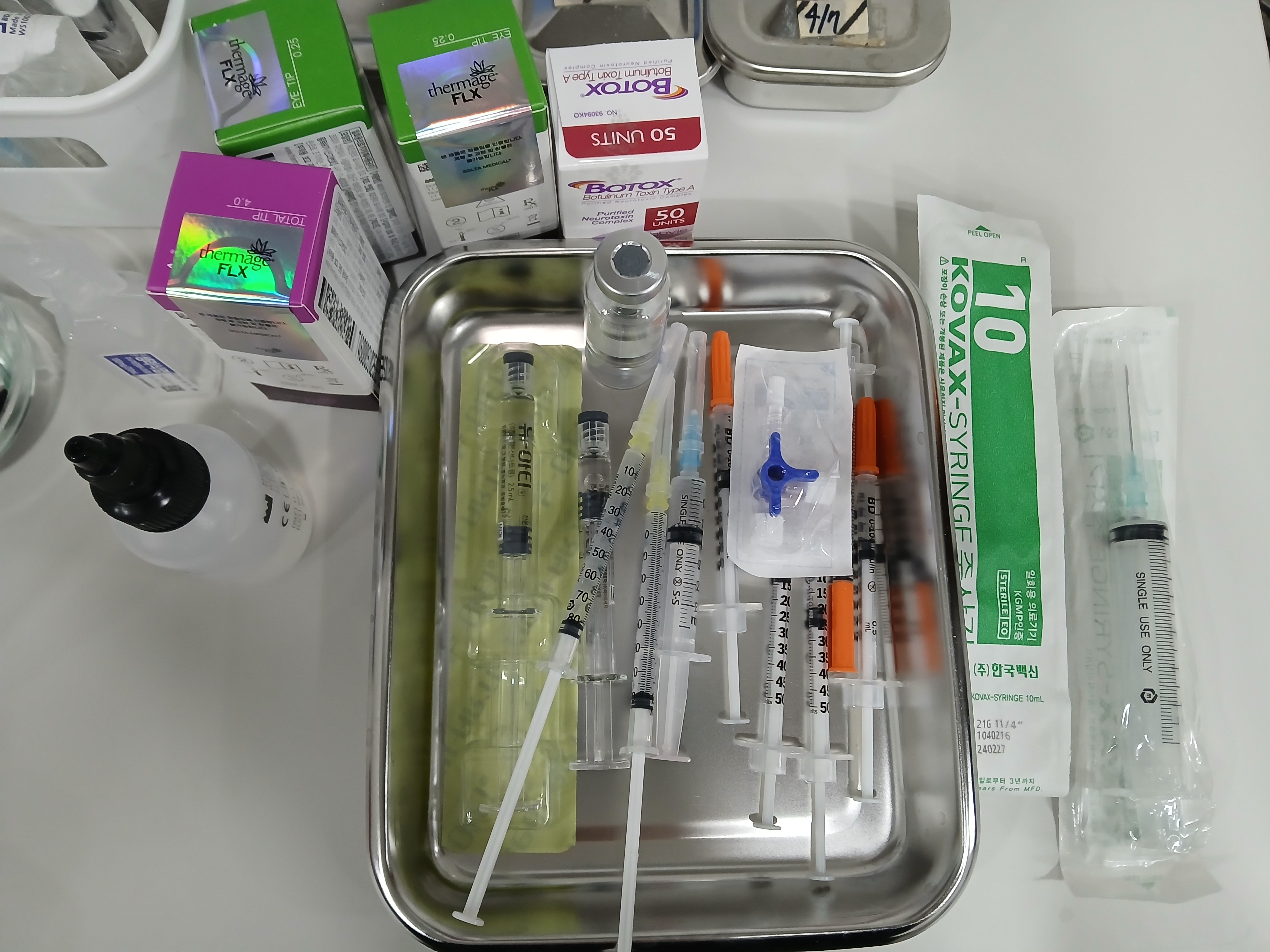
Botox asymmetry means the two sides of the face respond differently to botulinum toxin injections, so one brow, eyelid, or smile may sit slightly higher or move differently than the other. This guide explains why it happens, how to tell normal variation from a problem worth correcting, and what a measured 2026 approach to fixing it looks like. At LUNN, the working principle I follow is simple: define the cause first, then choose the smallest effective fix.
Botox Asymmetry: Definition and Why It Happens
Botox asymmetry is a visible difference between the left and right sides of the face in how muscles move or how skin rests after botulinum toxin treatment. Because facial muscles are rarely perfectly symmetrical to begin with, a small degree of difference is a normal part of treatment, not automatically a mistake. The useful question is not whether asymmetry exists, but whether the pattern is expected and whether it is settling.
What Counts as Asymmetry After Botox?
Asymmetry after Botox describes any noticeable mismatch between the two halves of the face following injection. In practice, clinicians look for a few recurring patterns. A brow may arch higher on one side, an eyelid may feel heavier, or one side of the smile may lift less than the other. Sometimes the difference is in resting tone rather than movement, so the face looks uneven in photos but feels fine in motion.
Context matters more than any single number. Most people have baseline facial asymmetry before any injection, and photographs taken with a front camera exaggerate it. A difference that appears only when raising the brows forcefully, for example, is usually far less significant than one visible at rest. Clinicians typically compare sides during animation and at rest, and they review pre-treatment photos when available. Mild differences that no one notices in conversation are generally within the range of normal variation, while a change that alters expression at rest deserves a conversation with the injector.
Common Causes: Dose, Technique, and Muscle Anatomy
Three factors account for most asymmetry after Botox: dosage differences, injection technique, and individual muscle anatomy. Each produces a distinct pattern, which is why assessment comes before any correction. Understanding the cause also explains why the same touch-up does not suit every case.
- Dose and distribution. If one side receives slightly more units, or the product spreads differently, movement drops more on that side.
- Technique. Injection depth and the exact point selected influence which muscle fibers are affected.
- Anatomy. The frontalis, corrugator, and orbicularis muscles vary in size, strength, and fiber direction from person to person, and left-right differences are the norm.
- Pre-existing asymmetry. Uneven baseline tone or habits such as chewing predominantly on one side can become more visible once muscles relax.
- Aftercare. Rubbing or pressing the treated area in the first hours can shift product distribution.
Because these factors overlap, a clinician usually confirms the cause before recommending anything, since correcting a dosage issue with filler, for example, would miss the point entirely. More detail on how muscle thickness is assessed appears in this guide to assessing muscle thickness before Botox.
Is It Normal? Typical vs. Atypical Patterns
Mild asymmetry after Botox is normal and expected in a meaningful share of treatments, while certain patterns are atypical and warrant review. Distinguishing the two is the single most useful step for anyone worried about their result. The table below summarizes how clinicians typically frame the difference.
| Pattern | Typical (usually reassuring) | Atypical (worth review) |
|---|---|---|
| Timing | Appears day 3 to 10, then settles | Worsens steadily after week 2 |
| Severity | Visible only in photos or strong expression | Obvious at rest in conversation |
| Location | Slight brow height difference | Eyelid droop, inability to close an eye |
| Duration | Improves by week 4 | Persists past 4 weeks unchanged |
| Function | Normal facial movement | Difficulty blinking or smiling |
Peak effect typically arrives between days 7 and 14, and the result continues to refine through weeks three and four. A difference noticed on day two is often simply incomplete onset. Patterns involving eyelid heaviness, difficulty closing the eyes, or a smile that pulls markedly to one side fall into the atypical group and should be assessed sooner rather than later. Nothing in this article is a diagnosis; an in-person evaluation by a qualified injector is always the appropriate next step.
How to Assess and Fix Botox Asymmetry
Assessing Botox asymmetry is a structured process of comparing timing, severity, and function before choosing a fix. The goal is to avoid two opposite errors: correcting too early, when the toxin is still arriving, and waiting too long when a simple adjustment would resolve the issue. A clear timeline and an honest comparison of options make the decision considerably easier.
Timeline: When to Wait and When to Act
Timing drives most decisions about Botox asymmetry. Botulinum toxin does not work instantly. Onset usually begins within two to three days, peaks around one to two weeks, and the visible result continues to settle for roughly four weeks. Asymmetry observed in the first week is frequently a snapshot of an unfinished process rather than a final outcome.
A practical framework helps. In the first 48 hours, avoid rubbing the area and let the product settle. From day 3 to day 14, note the pattern rather than reacting to it, ideally with a few photos taken in consistent lighting. From week two to week four, most differences narrow. Beyond week four, if the difference remains stable and bothers the person, a correction visit becomes reasonable. Persistence past four weeks is the commonly used threshold for considering a touch-up.
One counterpoint deserves attention: not every asymmetry should be chased. Small differences that appear only under deliberate scrutiny often resolve as muscle tone adapts. Repeated early touch-ups can compound the problem by adding unpredictability. Waiting is itself a legitimate clinical decision.
At-Home Strategies vs. In-Clinic Corrections
Home remedies for Botox asymmetry are widely discussed and poorly supported. Facial exercises, massage, and heat application are often suggested online, but there is no reliable evidence that they correct an uneven result, and massage in the first 24 hours may actually spread the product unpredictably. What home care can do is modest but real: avoid pressure on the area, avoid strenuous exercise and lying face-down for the first few hours as advised, and keep consistent photographs so the pattern is clear at the follow-up.
In-clinic correction is a different category. A clinician examines the face in motion and at rest, reviews the original dosing map, and decides whether the cause is under-treatment on one side, over-treatment on the other, or an anatomical factor. A small targeted touch-up is the usual approach; occasionally the answer is to wait for the current cycle to fade. Importantly, correction is a clinical judgment, not a standard package, and outcomes vary between individuals. A balanced discussion of recurrence and long-term planning is available in this guide to Botox effectiveness over time.
What to Expect During a Correction Visit
A correction visit is a short, structured appointment focused on diagnosis before injection. It typically begins with a review of the original treatment, including the muscles treated, the units used per side, and the date. The clinician then observes the face at rest, during brow elevation, during a full smile, and during eye closure. Photographs taken in the same lighting and from the same angle are compared with pre-treatment images where available.
The examination usually clarifies the mechanism within minutes. If one side was under-dosed, a small additional dose may be placed on that side. If the opposite side was over-treated, the better option is often to let it recover rather than add more product. In some cases, the difference reflects volume or skin laxity rather than muscle activity, in which case injectable toxin will not solve it and other approaches may be discussed.
After correction, the expected course is another one to two weeks before the change is fully visible. Patients are usually advised to avoid rubbing the area and to return for review if the difference does not settle. Honest expectations matter: a touch-up can improve balance, but it cannot promise a perfectly symmetrical face, since no face is perfectly symmetrical to begin with.
Comparing Treatment Options for Asymmetry Correction
Comparing treatment options for Botox asymmetry means weighing timing, invasiveness, and predictability against each other. The available choices range from doing nothing to targeted re-injection, and each suits a different scenario. Neutral comparison, rather than ranking, is the right frame, because the best option depends entirely on the cause identified during assessment.
Watchful Waiting vs. Touch-Up Botox
Watchful waiting and touch-up Botox represent the two ends of the correction spectrum. Waiting costs nothing, carries no additional risk, and allows the current cycle to reach its natural endpoint. It suits mild differences noticed early, differences that are already improving, and cases where the person is uncertain whether the asymmetry is truly visible to others. The limitation is time: the result will not change until the current cycle resolves, and the difference remains visible in the interim.
Touch-up Botox is targeted and relatively quick but introduces a second variable. A small dose placed into the stronger side or the under-treated side can balance movement, and many clinicians consider it once the four-week mark has passed. The trade-offs are additional cost in many clinics, a further one to two weeks before the effect appears, and the possibility that the correction overshoots. Neither option is superior in principle. Waiting is generally reasonable first, and touch-up becomes reasonable when the pattern is stable, visible, and bothersome.
Adjunctive Treatments and Their Limitations
Adjunctive treatments address asymmetry that Botox alone cannot resolve. When the difference comes from volume loss, skin quality, or structural features rather than muscle activity, adding more toxin does not help. In those situations, a clinician may discuss dermal fillers for volume differences, skin boosters for texture, or lifting modalities for laxity. Each has a specific role and a specific ceiling.
Fillers can restore volume on one side but carry risks including bruising, swelling, and the need for careful technique, and they do not change muscle movement. Energy-based lifting can improve tone over weeks to months but will not correct a toxin-driven movement imbalance. Skin boosters influence hydration and texture rather than contour. Combining treatments adds cost and recovery considerations, and results vary by individual.
The key limitation is diagnostic: adjunctive options work only when the cause matches the tool. Anyone considering them should expect a proper assessment first. Related reading on combining approaches is available in this article on skin boosters and lifting.
Cost and Convenience Comparison Table
The table below compares common approaches in neutral terms. Figures are not quoted because pricing varies by clinic, region, and units used; the comparison focuses on structure rather than price.
| Option | Timing | Visits | Predictability | Limitations |
|---|---|---|---|---|
| Watchful waiting | Immediate decision, result over 2 to 4 weeks | None | High (natural resolution) | Difference remains visible meanwhile |
| Touch-up Botox | After roughly 4 weeks | One short visit | Moderate to high | Extra cost at many clinics, 1 to 2 weeks to appear |
| Dermal filler | Any time, cause-dependent | One visit plus review | Moderate | Bruising, swelling, does not alter muscle movement |
| Energy-based lifting | Staged sessions | Multiple | Gradual | Weeks to months, no effect on toxin-driven imbalance |
Insurance generally does not cover cosmetic correction, and fees should be discussed openly at consultation. Convenience favors waiting and single touch-ups; complexity rises with combination plans.
Safety, Risks, and When to See a Specialist
Safety around Botox asymmetry concerns two things: recognizing genuine complications and choosing an injector who can prevent and manage them. Most asymmetry is cosmetic and temporary, but a small set of presentations requires prompt medical review. Knowing the difference protects both the result and the person.
Potential Side Effects and Red Flags
Common, expected effects after Botox include mild redness, slight swelling at injection points, and temporary bruising. These usually settle within days. More significant effects include brow ptosis (a heavy brow), eyelid ptosis (a drooping eyelid), and, when injections are placed near the lower face, occasional asymmetry of the smile. At LUNN, we believe these outcomes are preventable through the injector's precise judgment of dosage and placement. While they typically improve as the toxin wears off, our goal is to eliminate these errors through detailed structural analysis.
Red flags warrant prompt contact with a clinician: difficulty closing the eyes completely, persistent double vision, marked drooping of the eyelid, difficulty swallowing or speaking, signs of infection such as spreading redness, warmth, or pain, and asymmetry that worsens steadily rather than settling. Any treatment also carries a small risk of unexpected response, and no injectable is risk-free. Correction itself carries the same categories of risk as the original treatment. These possibilities are uncommon but should be discussed before any correction is planned.
How to Choose a Qualified Injector
Choosing a qualified injector is a key preventive measure available. Relevant criteria include medical licensure and training in facial anatomy, experience with the specific treatment area, willingness to review pre-treatment photographs, and a consultation process that includes discussing risks and alternatives rather than only outcomes. A clinician who maps the muscles, records the units used per side, and schedules a review appointment is demonstrating the habits that reduce avoidable asymmetry.
LUNN Dermatology Clinic approaches injections as an anatomical exercise in detail, treating small positional differences as meaningful because they change expression. That philosophy, refined over years of facial treatments, is stated plainly: precise placement and honest expectation-setting matter more than volume of product. We believe that natural results are a direct reflection of an injector's skill in judging muscle resistance. Anyone seeking care should feel comfortable asking about training, approach, and what happens if the result needs adjustment. Follow-up policy is a fair question at consultation and often distinguishes careful practices.
Preventing Future Asymmetry: Best Practices
Prevention begins before the first injection and continues through aftercare. Several practices meaningfully reduce the chance of a repeat uneven result, though none eliminates it entirely.
- Share any known baseline asymmetry and prior treatment history at consultation.
- Ask how units will be distributed per side and why.
- Avoid rubbing or massaging the treated area for 24 hours.
- Follow post-treatment activity guidance for the first day.
- Keep a review appointment at four weeks, with consistent photos.
- Raise concerns early rather than adding product independently.
- Maintain consistent intervals between treatments rather than stacking corrections.
Individuals with strongly asymmetric baseline anatomy may benefit from a plan that accounts for it from the outset, sometimes with staged dosing. Consistency in injector and technique across sessions helps, since the same clinician can compare results over time. Finally, realistic expectations are protective: a balanced face is not a perfectly symmetrical one, and chasing millimeter-level equality can lead to over-treatment. Preparation guidance for related treatments is discussed in preparing skin for laser treatment.
Key Takeaways
- Mild asymmetry after Botox is common and often resolves by week four as the toxin reaches full effect.
- Dose, technique, muscle anatomy, and pre-existing asymmetry are the main drivers.
- Waiting until four weeks is generally the sensible first step before considering correction.
- Home exercises and massage are not proven fixes and can occasionally make things worse.
- Eyelid droop, difficulty closing the eyes, or worsening asymmetry warrant prompt medical review.
Asymmetry is best treated as a diagnostic question rather than an emergency. At LUNN Dermatology Clinic, the emphasis stays on careful assessment, small targeted adjustments, and honest conversation about what correction can and cannot achieve. If you notice an uneven result that persists past four weeks, a consultation is the right place to start. Please note that results may vary between individuals and side effects such as bruising or temporary swelling can occur.
Lunn Dermatology Clinic / Dr. Hyung-kwon Park
Frequently Asked Questions
Q. Is it normal to have asymmetry after Botox?
Yes, mild asymmetry is a normal possibility and is often temporary. It can result from differences in muscle strength, small variations in dosing, or how the product spreads. Most cases settle within a few weeks as the toxin reaches peak effect and muscles relax. Persistent or pronounced asymmetry should be evaluated by a qualified injector rather than self-managed.
Q. How long does Botox asymmetry usually last?
Most asymmetry improves within two to four weeks as the toxin reaches full effect. If a difference remains stable beyond four weeks, a touch-up or adjustment may be considered. In some cases, full resolution arrives only as the effect wears off over roughly three months. Individual timelines vary with dose, area treated, and anatomy.
Q. Can I fix Botox asymmetry at home?
Home remedies such as facial exercises or massage are not proven to correct asymmetry, and massage in the first 24 hours may disturb product distribution. The safest approach is to avoid pressure on the treated area and consult your injector for assessment. Consistent photographs taken in the same lighting can help the clinician judge the pattern at follow-up.
Q. What are the treatment options for Botox asymmetry?
Options include watchful waiting, a small touch-up dose to balance muscle activity, or, when the cause is volume rather than movement, additional treatments such as filler. The right choice depends on the cause and the timing. An injector should examine the face in motion and at rest before recommending anything.
Q. How much does it cost to correct Botox asymmetry?
Costs vary by clinic, region, and the number of units involved. Some practices include a review or touch-up within a set period, while others charge per unit. Fees are best discussed openly at consultation. Cosmetic correction is generally not covered by insurance.
Q. When should I see a doctor for Botox asymmetry?
Seek medical attention if you experience severe asymmetry, difficulty closing your eyes, eyelid drooping, difficulty swallowing or speaking, or signs of infection such as spreading redness, swelling, or pain. These can indicate complications that need prompt evaluation. Mild differences that are already improving can usually wait for a scheduled review.
Q. How can I prevent asymmetry after Botox?
Choose an experienced injector who understands facial anatomy and uses precise dosing, and share any prior asymmetry or treatment history. Avoid rubbing the treated area for 24 hours and follow post-care instructions. Keep a four-week review appointment and raise concerns early instead of adding product on your own.
Q. Is Botox asymmetry a sign of a bad injector?
In our philosophy, asymmetry often points to a need for more precise judgment in dosage, dilution, or placement. At LUNN, we believe that achieving a natural result and avoiding asymmetry depends entirely on the injector's skill and ability to accurately analyze each patient's unique muscle resistance and anatomy. While minor imbalances can occur during the settling phase, persistent issues are generally avoidable through professional expertise.
Q. Does asymmetry after Botox ever need urgent care?
Urgent review is warranted when function is affected, such as an inability to close the eye, persistent double vision, or difficulty swallowing or speaking. These presentations are uncommon but should not wait for a routine appointment. Cosmetic asymmetry alone, without functional symptoms, is not an emergency.
FAQ
- Is it normal to have asymmetry after Botox?
- Yes, mild asymmetry is a normal possibility and is often temporary. It can result from differences in muscle strength, small variations in dosing, or how the product spreads. Most cases settle within a few weeks as the toxin reaches peak effect and muscles relax. Persistent or pronounced asymmetry should be evaluated by a qualified injector rather than self-managed.
- How long does Botox asymmetry usually last?
- Most asymmetry improves within two to four weeks as the toxin reaches full effect. If a difference remains stable beyond four weeks, a touch-up or adjustment may be considered. In some cases, full resolution arrives only as the effect wears off over roughly three months. Individual timelines vary with dose, area treated, and anatomy.
- Can I fix Botox asymmetry at home?
- Home remedies such as facial exercises or massage are not proven to correct asymmetry, and massage in the first 24 hours may disturb product distribution. The safest approach is to avoid pressure on the treated area and consult your injector for assessment. Consistent photographs taken in the same lighting can help the clinician judge the pattern at follow-up.
- What are the treatment options for Botox asymmetry?
- Options include watchful waiting, a small touch-up dose to balance muscle activity, or, when the cause is volume rather than movement, additional treatments such as filler. The right choice depends on the cause and the timing. An injector should examine the face in motion and at rest before recommending anything.
- How much does it cost to correct Botox asymmetry?
- Costs vary by clinic, region, and the number of units involved. Some practices include a review or touch-up within a set period, while others charge per unit. Fees are best discussed openly at consultation. Cosmetic correction is generally not covered by insurance.
- When should I see a doctor for Botox asymmetry?
- Seek medical attention if you experience severe asymmetry, difficulty closing your eyes, eyelid drooping, difficulty swallowing or speaking, or signs of infection such as spreading redness, swelling, or pain. These can indicate complications that need prompt evaluation. Mild differences that are already improving can usually wait for a scheduled review.
- How can I prevent asymmetry after Botox?
- Choose an experienced injector who understands facial anatomy and uses precise dosing, and share any prior asymmetry or treatment history. Avoid rubbing the treated area for 24 hours and follow post-care instructions. Keep a four-week review appointment and raise concerns early instead of adding product on your own.
- Is Botox asymmetry a sign of a bad injector?
- Not necessarily. Even skilled injectors can encounter asymmetry because of individual muscle anatomy or an unexpected response to the toxin. It may, however, indicate that technique or dosing needs adjustment. Discussing the pattern openly with your provider is the most productive next step.
- Does asymmetry after Botox ever need urgent care?
- Urgent review is warranted when function is affected, such as an inability to close the eye, persistent double vision, or difficulty swallowing or speaking. These presentations are uncommon but should not wait for a routine appointment. Cosmetic asymmetry alone, without functional symptoms, is not an emergency.